
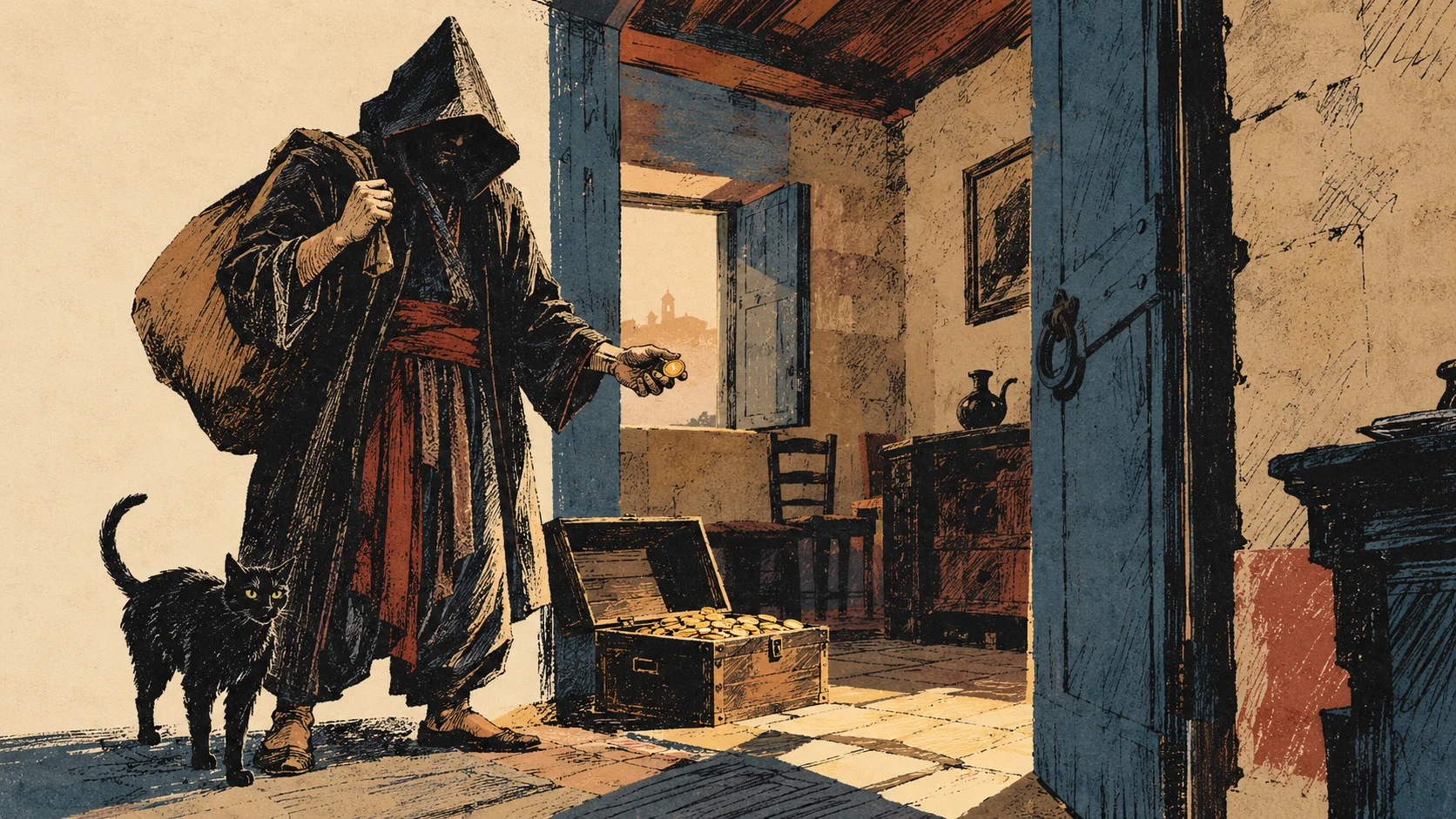
Il-Ħares, the guardian already living in the house
There was once an awkward question to ask before moving into an old Maltese house. Not whether the roof leaked, but whether somebody was already living there.
The occupant in question was il-Ħares.
Strictly speaking, he was not a ghost. The Maltese folklorist Ġużi Gatt distinguishes the Ħares from a ruħ or fatat, the spirit of somebody who had died. Ħares, he explains, means a guardian or watchman. You did not bring a Ħares into a house. You entered one and found he was already there, and whether that was good news depended on whether he liked you.
An Arab import?
Fredu Nicholas, a Maltese writer and language scholar from the Maltese community in Egypt, argued that the tradition originated in the Arab world. He compared it with Near Eastern beliefs involving the ġinn, the għafrid and the ħares il-bejt, literally the guardian of the house, and believed the tradition reached Malta during Arab rule.
The linguistic connection is stronger than the historical claim. Both Nicholas and Gatt tie ħares to guarding or watching over something. Gatt explicitly rejects the tempting alternative that the name comes from the Roman Lares, who were themselves household guardian spirits.
Proving that a particular legend travelled to Malta with the Arabs a thousand years ago is much harder. Folklore rarely has a clean family tree. Stories move between cultures and change along the way. What can be said more safely is that the Ħares sits comfortably within Malta’s Semitic and Mediterranean cultural inheritance.
Not every haunting was a Ħares
Doubts about where he came from did little to simplify Malta’s supernatural bureaucracy. Traditional terminology gave different creatures different jobs.
A dead person who kept appearing because he or she had not found peace was not properly a Ħares. Gatt describes stories of people who had been murdered, unjustly executed, or denied the masses that were supposed to be said, and paid for, after their death. These spirits returned because an injustice remained unresolved. They were erwieħ, and Gatt suggests fatati as the right term for these restless dead.
The Ħares was a different creature altogether. He occupied empty houses, caves and abandoned buildings, especially places linked to hidden treasure. New occupants might receive gold, a fright or a beating, apparently depending on his mood. A fatat, by contrast, was the spirit of somebody who had actually lived and died.
Modern Maltese has largely flattened these distinctions. Today, most people would simply call any of them a ghost.