
Less debt burden doesn’t mean we can overspend
The next question is how to preserve that healthy position while addressing the country’s investment needs.
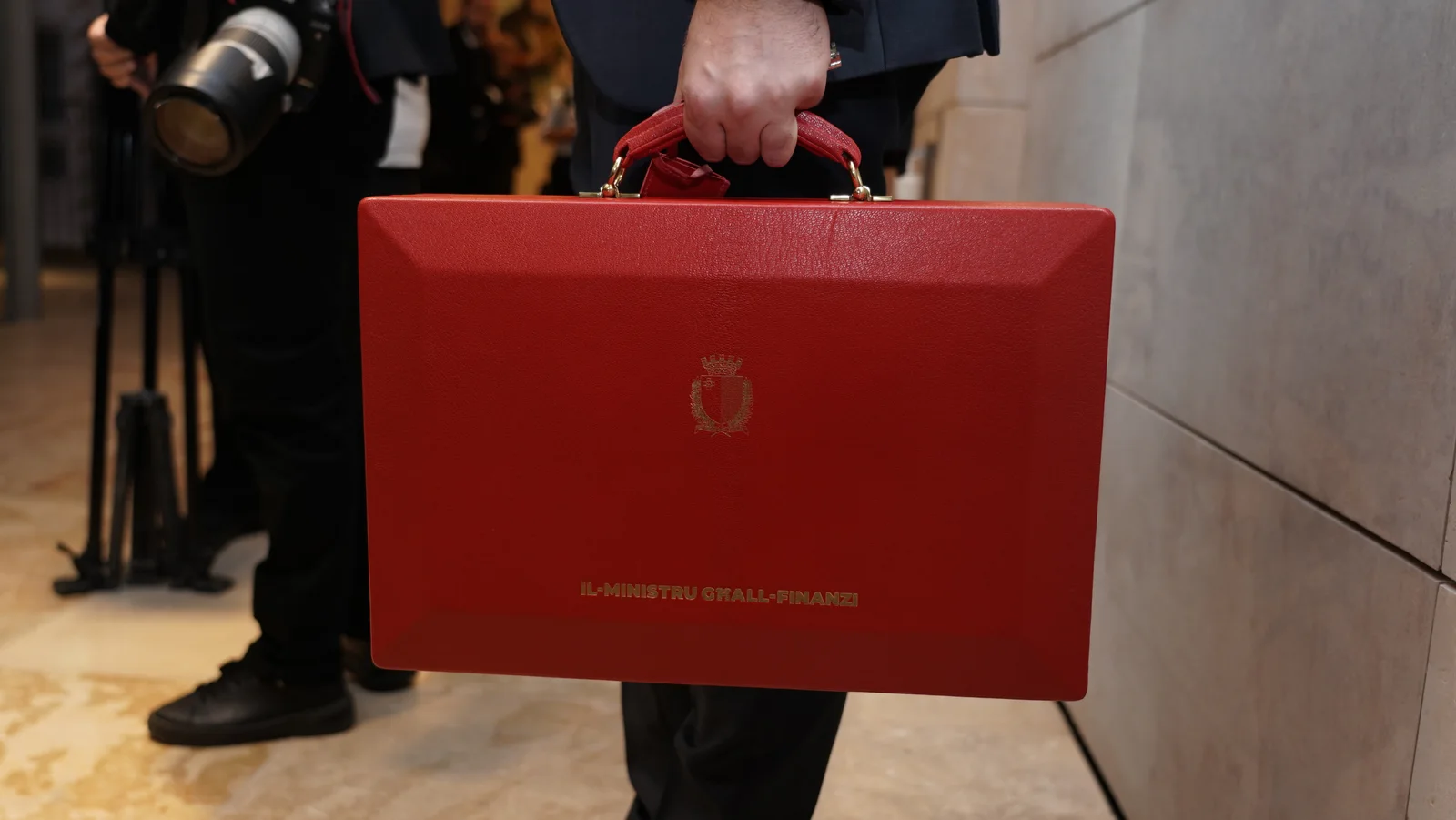
With Malta’s Budget for 2027 approaching on 26 October, one of the most important questions is how much the government can afford to spend, and how much it should continue borrowing.
On paper, Malta enters this year’s Budget from a relatively strong position. Its public debt, measured against the size of the economy, is among the lowest in the European Union. More importantly, over the past twenty years, no other EU member state has reduced this ratio by as much as Malta.
In 2005, Malta’s government debt stood at 70.2% of GDP. By 2015, it had fallen to 55%, and by the end of 2025, it stood at just 46.4%.
That is a reduction of 23.8 percentage points, the largest among all 27 countries that make up today’s European Union.
The contrast with the rest of Europe is striking.
Malta's debt ratio fell. What happened to the EU's?
Government debt as a share of GDP. Malta's line is drawn for you.
Most European countries have gone in the opposite direction
While Malta’s debt ratio declined, the EU’s combined government debt increased from 67.2% of GDP in 2005 to 81.7% in 2025. Only six EU countries, including Malta, ended the period with a lower debt ratio than they had twenty years earlier.
France’s debt increased from 68.2% to 115.6% of GDP. Spain went from 42.4% to 100.7%, while Italy’s already elevated debt ratio rose from 106.2% to 137.1%. Malta, meanwhile, moved in the opposite direction, falling from above the EU average in 2005 to well below it today.
Only six EU countries cut their debt ratio in twenty years
Government debt as a share of GDP, 2005 and 2025, sorted by change. Malta had the largest fall
The country also sits comfortably below the 60% debt-to-GDP reference value established under the EU’s fiscal rules. This puts Malta in a considerably different position from countries such as France, Italy and Greece, where high debt levels place greater pressure on public finances.
Yet the figures tell only part of the story.
Guess: how much does Malta's government owe?
In 2005 the government owed about €3.61 billion. Move the slider to where you think it stood at the end of 2025.
Malta’s debt has actually tripled
A lower debt-to-GDP ratio does not necessarily mean that a government owes less money.
In Malta’s case, the opposite has happened.
In 2005, the government owed approximately €3.61 billion. By 2015, this had increased to €5.63 billion. At the end of 2025, it reached €11.40 billion.
In other words, Malta’s government debt has more than tripled over the past twenty years.
So how can the country owe more money than ever before while appearing less indebted?
The answer lies in the size of the economy.
Debt-to-GDP measures government debt relative to everything the economy produces in a year. A government that owes €10 billion in an economy producing €20 billion annually has a debt ratio of 50%. If the economy grows to €25 billion while the debt remains at €10 billion, that ratio falls to 40%.
The debt itself has not decreased. But it has become smaller relative to the economy’s capacity to generate income.
Try it: can you cut the ratio while borrowing more?
Move the two sliders. The ratio is debt divided by the size of the economy.
That is broadly what has happened in Malta. The economy has expanded considerably faster than the amount of government debt.
This is an important achievement, but it also means that Malta’s favourable debt position depends partly on maintaining economic growth. If growth slows while borrowing continues, reducing the debt ratio becomes more difficult.
A strong position does not mean unlimited spending
There is another distinction worth making. Being below the EU’s 60% reference value does not automatically mean that the government has money available to spend.
Malta is still borrowing.
According to the National Statistics Office, the government registered a deficit of €545.3 million in 2025, equivalent to 2.2% of GDP. Total debt increased by €776 million during the year.
In fact, the debt-to-GDP ratio increased slightly from 45.9% in 2024 to 46.4% in 2025, despite remaining considerably below its level twenty years earlier.
This illustrates why the direction of public debt matters as much as its current level.
A government can run deficits while maintaining a manageable debt ratio, particularly when the economy is growing rapidly. But that relationship becomes less favourable if economic growth slows, interest costs increase or expenditure rises faster than revenue.
The question, therefore, is not simply whether Malta can borrow more. It is whether the borrowing will leave the country better equipped to meet its future obligations.
The real test of the Budget is what the money achieves
This brings the discussion to the choices facing the government in the coming Budget.
Not all government expenditure has the same economic consequences.
Borrowing to finance infrastructure that reduces congestion, improves connectivity or supports more efficient businesses can generate benefits over many years. Investment in education, skills and technology can also help raise productivity, allowing the economy to produce more without relying entirely on additional workers.
Such expenditure may support the economic growth needed to keep public debt manageable. Recurring expenditure, however, creates a different challenge. Once the government introduces a permanent benefit, subsidy or spending commitment, it must find the money to finance it year after year.
This does not make recurring expenditure inherently undesirable. Healthcare, education and social protection are essential public services. But their long-term affordability depends on whether government revenue can keep pace with their cost.
The quality of spending also matters. An expensive infrastructure project does not automatically produce an economic return simply because it is classified as investment. Equally, expenditure on public services can strengthen the economy if it improves health, education or workforce participation.
What matters is whether public money produces lasting economic and social benefits relative to its cost.
There is also a question of resilience. Malta’s debt position gives it a useful advantage over more heavily indebted European economies, but that advantage should not be taken for granted.
Economic shocks, slower growth and unexpected expenditure can quickly change the fiscal outlook. Maintaining room to respond to such developments is itself an important reason to manage public finances carefully.
Ahead of the Budget, Malta therefore faces two related challenges: sustaining the economic growth that has helped reduce its debt burden, and ensuring that public expenditure strengthens the country’s capacity to grow in the future.
The past twenty years demonstrate that Malta has been able to expand its economy faster than its public debt. The challenge for the next twenty is to ensure that this remains possible in a sustainable way.
Malta’s comparatively low debt ratio is an advantage. How the government uses that advantage will matter more than the ranking itself.