
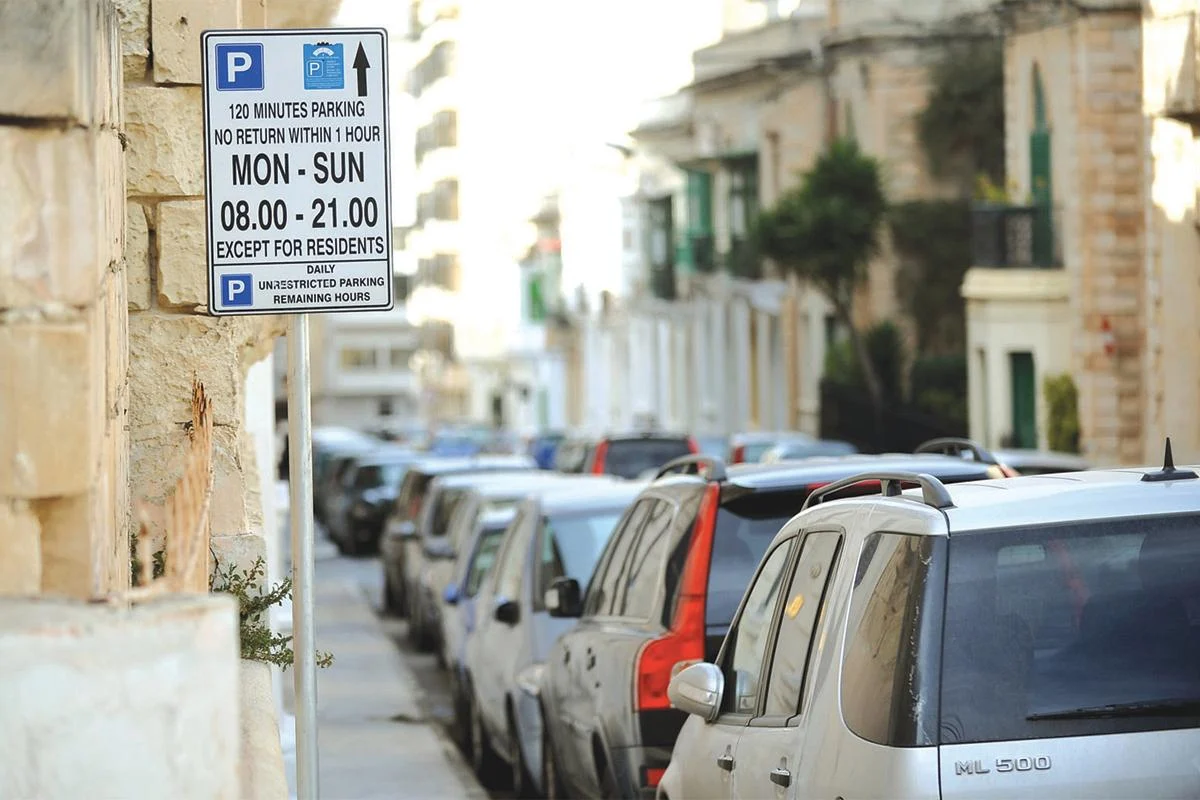
This is why we should pay for parking
It is often reiterated that Malta has very limited resources. It has become almost a cliche of sorts, intended to stress the work ethic that must make up for the land we lack. It is of course true that space in this country is in short supply, yet in many ways we have been treating land as an unlimited resource, exemplified in part by the unwritten right we have become accustomed to; the right is to park freely, almost everywhere, for almost anytime – in stark contrast to other cities around the world where space is in short supply.
As land is in short supply, the socioeconomic cost to occupy any public space is high. Land that could be serving residents, businesses, or trees, is being committed to unmoving vehicles. Moreover, when something scarce is offered at no price, demand predictably exceeds supply. Drivers circle for available space, some streets become permanent storage areas for private vehicles, and the people who genuinely have no alternative but to drive and park are often the least likely to find it.
This issue is further exacerbated when placed within Malta’s current traffic challenges. Trying to solve traffic by improving the road network, and making public transport more attractive may help, but the underlying incentive remains largely untouched: in most places, including dense and busy town centres, parking on public land is still free. The scale of the wider burden is substantial: the National Transport Master Plan estimates that the economic cost of congestion costs Malta around €770 million a year, rising to €917 million by 2030.
The pressure is increasing. Malta had 463,734 licensed vehicles at the end of June 2026, with the stock growing by a net average of 34 vehicles a day during the quarter. In July, the Sustainable Mobility Minister described parking as the country’s biggest road challenge. The policy response, however, still appears focused mainly on creating or unlocking more spaces, while ruling out systems that charge users.
There should at least be a discussion on managing demand. A carefully designed parking charge in congested town centres would not be about punishing car ownership. It would be about pricing car use where space is most constrained. Those with more access to alternative options to travel differently, or park farther away would be more motivated to do so. Those who genuinely need space would have a better chance of finding one because their willingness to pay is higher.
When the wider social cost of parking is reflected in price, demand moves toward a more efficient level.
Naturally this does not need to be a broad-brush based policy; designing a smart, fair, but effective system is possible and critical for persuading the sceptical. Residents could receive permits, charges could vary by area and time, and evenings could remain free where transport alternatives are weak or parking is abundant. Revenue could be visibly reinvested in the same localities, through better walking infrastructure, and long-term transport and underground parking solutions. Targeted support could also protect commuters with very limited options.
This will not solve Malta’s congestion concern on its own. Efficient public transport, safer walking/cycling routes and credible park-and-ride options must come with it. But continuing to treat every parking space as free hides its real economic cost and encourages the behaviour we say we want to change.
Sources
- National Statistics Office, Motor Vehicles: Q2/2026
- The Malta Independent, “Parking is country’s biggest problem on the roads…” (13 July 2026)
- MaltaToday, Malta Chamber calls for serious traffic reforms (15 July 2026)
- Transport Malta, consultation on public use of commercial car parks (16 March 2026)
- Times of Malta, “Traffic to cost Malta €770 million in 2025, says report” (24 November 2025)